
How Dental Implants Can Restore Your Smile and Improve Everyday Confidence
Dental implants can replace missing teeth with restorations designed to look natural and remain stable during everyday activities. For patients who feel self-conscious about a gap or frustrated by changes in chewing, speaking, or smiling, implants may provide a durable path forward. Lee Plaza Dental helps patients in Kansas City explore their oral health needs and appropriate restorative dentistry options.
Replacing a tooth is not only about appearance. A complete, comfortable smile can influence food choices, social interactions, and the willingness to speak or laugh without hesitation. Understanding how implant treatment works can make it easier to ask informed questions and determine whether this option fits your needs.
How Do Dental Implants Restore Your Smile?
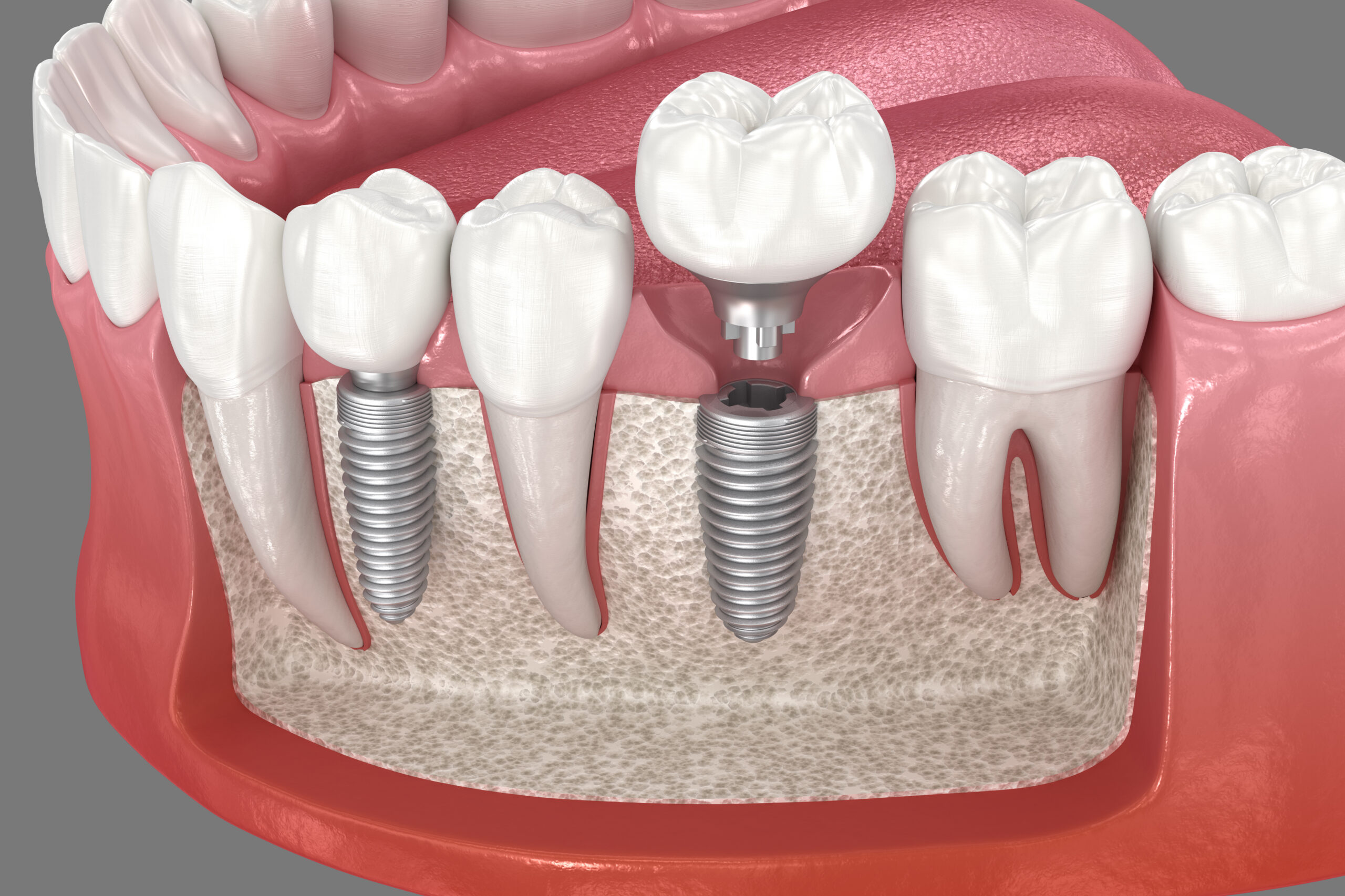
Dental implants replace missing teeth by providing stable support for a dental restoration. An implant is placed in the upper or lower jaw, where it serves as an anchor for a replacement tooth. Once treatment is complete, the restoration is intended to improve the smile’s appearance while supporting comfortable everyday function.
Implants may be used in different treatment plans depending on how many teeth are missing and the condition of the mouth. A professional evaluation (both restorative and surgical) is necessary because implant treatment must be planned around the patient’s oral health, available bone, medical considerations, and long-term restorative needs. Dr. Lee works with a team of surgical specialists to provide the implant consultation and placement for her patients.
Why Replacing a Missing Tooth Matters
A missing tooth can change how biting pressure is distributed across the mouth. Some patients begin chewing primarily on the opposite side, while others avoid certain foods because the open space feels uncomfortable. Changes in speech may also occur depending on the tooth’s location.
The emotional effects can be just as noticeable. A person may cover their mouth while laughing, avoid photographs, or feel less comfortable meeting new people. Replacing the missing tooth can help address the visible gap while making daily routines feel more natural again.
Timing matters as well. Teeth can shift toward an open space, and the bone in the area of a missing tooth may change over time. An examination allows the dentist to assess the entire mouth instead of looking only at the visible gap.
What Concerns Should Patients Consider Before Implant Treatment?
Dental implants can be an effective option, but they are not automatically appropriate for every patient. Oral health, gum condition, bone support, medical history, medications, and personal habits may influence treatment planning. Patients should provide complete health information and ask how their individual circumstances could affect the process.
It is also important to understand that an implant does not make daily dental care unnecessary. The restoration cannot develop decay like a natural tooth, but the surrounding gums and neighboring teeth still require consistent care. Plaque accumulation and inflammation around the implant can threaten the tissues that help support it.
Another common misconception is that any damaged tooth should automatically be removed and replaced. When a natural tooth can be predictably restored, preserving it may be the recommended option. Patients can learn more about repairing a damaged tooth and how crowns differ from replacing a tooth that is already missing or cannot be restored.
What Does the Dental Implant Process Involve?
The process begins with a detailed dental evaluation. The dentist reviews the medical and dental history, the missing-tooth area, the surrounding gums, the neighboring teeth and patient’s bite. Additional diagnostic information may be needed to evaluate bone structure and plan the position of the implant.
Implant treatment generally takes place in stages. The implant is surgically positioned in the jaw, and the area is given time to heal. During this period, the bone and implant develop the stability needed to support the planned restoration. Healing time varies, so patients should follow the schedule and instructions established for their individual care.
After the implant is ready, a connector and final restoration can be used to complete the missing-tooth replacement. The finished result is carefully evaluated for appearance, fit, and the way it meets the opposing teeth. Because implant treatment involves both surgical and restorative considerations, planning is just as important as the final tooth. Dr. Lee works with a team of surgical specialists to provide the implant consultation and placement for her patients.
Discuss Your Missing-Tooth Concerns With Lee Plaza Dental
If a missing tooth is affecting your comfort or confidence, Lee Plaza Dental can evaluate your oral health and discuss appropriate restorative options. The practice serves patients from Kansas City, the Country Club Plaza, Westport, and surrounding communities. Schedule an appointment or call 816-323-0180 to take the next step toward a healthier, more complete smile.
Ready to Improve Your Smile?
Schedule your appointment today.